A total of 24 bridges span the River Thames in London, starting from the Kew Bridge to the Tower Bridge. These bridges are iconic representations and provide spectacular views and access to quite a few of the city’s most admired tours, highlights and events. By their own right, they are also celebrated landmarks.
The oldest of them all is the London Bridge, which was first built from wood. In year 1209 it was demolished and replaced by a stone bridge lined with houses and shops along its side. In 1831, the stone bridge was in turn replaced by a granite bridge, and the granite replaced in 1973 by the current concrete bridge. The current London Bridge was designed by Lord Holford. Work commenced in 1967 and was finished in 1972. The London Bridge has lived for over 182 years.
The current London Bridge was designed and constructed under the supervision of a renowned architecture, Michael Leeming. According to Michael Leeming, the immense bridge project was one of his greatest projects of which he is extremely proud to have designed. The London Bridge possesses one of the most excellent road types in London. It is an A3 road with 5 lanes and also happens to be one of the busiest bridges in London. The closest underground rail stations to the London Bridge are the Monument and London Bridge.
Being one of the most renowned bridges in the Capital city of England, London Bridge is a major tourist attraction in London. It is situated between the Tower Bridge and the Cannon Street Railway Bridge and connects the City of London with Southwark; it is commonly used by the vehicles in addition to pedestrians who subsequent to exiting the London Bridge tube station head across the bridge itself in order to reach the City of London.
London Bridge is currently recognized as the world’s biggest antique, and with the launch of the bridge in October 1971, the Lake Havasu City was permanently included on the country’s map as the world-famed attraction site continues to attract tourists in their tens of thousands to the city on a yearly basis.
London Bridge is also known to be home to a vast number of bats, which dwell in the nooks and crannies of its vacant interior. Also, the underside of the bridge is scattered with thousands of swallows who have also built their nests out of the mud pellets they collect from the Bridgewater Channel seashore.
The bridge’s popularity has a far-reaching effect as its name London Bridge is synonymous with a traditional nursery school rhyme titled London Bridge is Falling Down, which also makes reference to the collapse of the historical bridge.
An urban myth has it that a long time ago the bridge was purchased by an American industrialist, Robert P McCulloch, who shipped the bridge down to Arizona and rebuilt it brick by brick in Lake Havasu City as a tourist attraction, believing he had bought the much more iconic Tower Bridge. Nonetheless, this story is strongly disputed.
We all want to find a job that’s satisfying, challenging, and stimulating. After the expense and time investment that is higher education, sometimes those attributes are subordinated by the need for a big salary.
For a number of reasons, career choices within the medical community tend to have a high salary attached. To keep this list a diverse representation of different fields and skillsets, some medical career choices have been bunched together. Additionally, unconventional careers like professional athletes are not listed as well.
10. Airline Pilots, Co-Pilots and Flight Engineers
Average Annual Wage: $131,760
Expert pilots enjoy quite a few interesting benefits, not the least of which is flying a plane, wearing a smart uniform, and oodles of free travel. For good reason, professional pilots can’t just walk in off the street however, there is a significant amount of schooling and training that goes in before you can have a seat in the cockpit.
Becoming a top tier pilot that makes top tier money can take as long as 10 years, and when you consider the immense responsibility that pilots have to shoulder, that’s more than fair. Minimum requirements include a Bachelor’s degree in a discipline that is related to the world of aviation; an ATP (Airline Transport Pilot) certificate; and qualifying amounts of logged flight hours—often in excess of 100 hours of pilot-in-command fly time. Additionally, there is extensive training on specialized and advanced flight systems and rigorous physical and mental testing. Just keep in mind, the uniforms are really cool.
9. Lawyers
Average Annual Wage: $133,470
Lawyers frequently get a bad rap, but no one can deny how necessary and effective they are. Extensive schooling combined with a high hourly billing rate gives proficient lawyers a high earning potential. There are many areas of focus when it comes to practicing law, and some areas are more profitable than others. On average however, the salary is quite nice. The marketplace is crowded, but there is a seemingly endless need for qualified and professional lawyers.
Personal attributes that help are strong public speaking skills and the ability to think on your feet.
Minimum schooling requirements vary, but a baseline usually consists of a bachelor’s degree plus three years of law school. Entrance into the workforce is dependent on the grueling and unforgiving bar exam.
8. Computer & Information System Managers
Average Annual Wage: $136,380
The increasing reliance that major corporations have on their IT departments and digital infrastructure is matched by the compensation they provide to the people who make sure that everything runs smoothly. Responsibilities of this important position include coordinating massive IT efforts and organization-wide IT departments. Applicants must be computer literate.
Minimum requirements include a bachelor’s degree in computer science or information science, and the best bet to break the wage bank is to aim for the automotive manufacturing industry. There, on average, computer system managers make at least $40k more than in other industries.
7. Natural Sciences Managers
Average Annual Wage: $136,450
If you love being in the lab, but love the office just as much, then this position might be right for you. Natural science managers can be found in the fields of chemistry, biology, and physics—otherwise known as the technically complex fields. Employers come in two flavors: the lower paying government and state education positions bring averages wages down, while the private sector positions like the insurance and aerospace industry bring home enviable salaries.
Minimum requirements include a bachelor’s degree in a related scientific field with years of—often low paying—lab work.
6. Marketing Managers
Average Annual Wage: $137,400
The world of marketing is high-powered, fast moving, and very dynamic. The reward for a skilled marketing manager is a hefty salary, it is his or her job to broadcast the company’s message in the most public and impactful way possible. Mega-industries like fossil fuels, finance, and consumer goods take the best care of their marketing managers though even at the lowest levels the pay is often competitive.
Minimum requirements include a bachelor’s degree in marketing, but there is a lot of wiggle room in this field when it comes to education. Often experience is a bigger asset than education in the marketing world, and that combined with the dedication and skill of a rising star can catapult hopefuls into the marketing manager’s seat.
For some the mathematical world that engineers inhabit is daunting and as a result the job market is under saturated. Professional engineers are in high demand, and as a result talented individuals can rise through the ranks rapidly. The fossil fuel industry is a source of some of the highest paying positions for engineering managers, with complex infrastructure coordination needs these employers make their managers work for their high paying salaries.
Minimum requirements entail a bachelor’s degree though advancement relies heavily on experience in the field.
4. Petroleum Engineers
Average Annual Wage: $137,400
The fossil fuel industry is at it again with high-paying positions that reflect the absolutely behemoth amounts of money that stand to be made with the extraction and processing of petroleum. Their jobs entail the extraction, processing, and transport of petroleum from subterranean deposits all the way to your gas tank.
Minimum requirements include a bachelor’s degree in petroleum engineering and extensive experience in the field working with coop programs during their schooling.
3. Chief Executive Officers
Average Annual Wage: $180,700
Interestingly the position of CEO doesn’t require as much schooling as other high paying jobs, but on average pays more. And the pay doesn’t’ just come in the form of a check. Many CEOs are paid in company stock, an option that allows them to circumvent tax law and ties their income to the company’s—and therefore the CEO’s—performance. There is a massive amount of responsibility as CEO, like the office of the president, the buck stops there. Smart decisions can keep massive organizations on the cutting edge of their industry while one bad call can bring them to their knees. Additionally, CEOs are often incentivized with outsized bonuses intended to push them to bring the company to new heights of profitability.
This is another field where experience trumps education. Being a successful manager and a quick thinker that can perform under stress is more important than years upon years of schooling. An MBA is recommended but not always necessary.
2. Dentists and Orthodontists
Average Annual Wage: $170,940 (Dentists), $201,030 (Orthodontists)
Medical doctors take the cake when it comes to the highest paying jobs, but dentists and orthodontists make more than comfortable wages themselves. Dentists are plentiful and while they receive fair—in some cases much more than fair—compensation, orthodontists are much harder to come by therefore commanding higher salaries. Jobs in the medical field are education intensive; becoming a dentist requires a minimum of eight years of schooling with in depth hands-on and practical exams.
1. Doctors And Surgeons
Average Annual Wage: $234,950
It’s no surprise that the highest paid professions on this list go to medical doctors and surgeons. Grouped together, medical doctors collectively make the most, but there is a bit of variation within the field. Anaesthesiologists tip the scales as the highest paid with surgeons, gynaecologists, obstetricians, and general practitioners only trailing by a small margin. Clocking in at an average of $175,400, paediatricians make the least in the medical field, though that number is still substantially more than many of the other positions on this list.
The major wages come with a major education requirement as well. Minimum requirements include a bachelor’s degree, graduation from medical school, and roughly 3 to 8 years spent as a resident.
I sincerely hope that the readers of this article can walk the streets of their neighborhood in safety and security. I also hope that they can sleep safe in their beds. Unfortunately, this is not the case for everyone. We know that the modern world is full of new, and unforeseen dangers, but there is one danger that has been with us since the dawn of time; the darkness of man and the inhumanity of human beings.
This article examines the 20 countries worldwide that have the highest murder rates. This information is provided by the United Nations Office on Drugs and Crime, and it is measured by the number of homicides per 100,000 inhabitants per year.
20. Mexico, 21.5/100,000
Bordering the US to the north, and Guatemala to the South, Mexico is the fifth largest country in the Americas by area—it encompasses almost 2 million square kilometers or 760,000 square miles. Additionally, the country’s capital of Mexico City is the second largest in the hemisphere. It is no secret that drug cartels have a powerful grip in Mexico, and as a result disputes can turn lethal with sometimes public and gruesome murders.
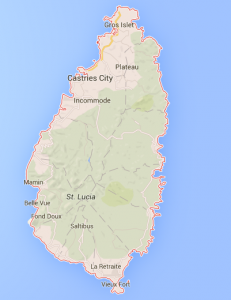
19. Saint Lucia, 21.6
Though the physical number of murders is low compared to larger nations, Saint Lucia’s small population means that a shockingly high percentage of the population is murdered each year. In 2007 there were 27 reported murders, a number that has since doubled and when compared to the Caribbean nation’s population of only 175,000 the murders-per-capita rating is very high.
18. Dominican Republic, 22.1
The entire population of the Dominican Republic is only a little higher than that of Mexico City, but many of those people live in fear. The Dominican Republic is the second largest Caribbean country and, like Mexico, suffers from high numbers of drug trade related murders. The Dominican Republic is said to serve as a waystation or point of transit for many Columbian drugs headed for Europe or the US.
Not surprisingly, Columbia has its own spot a bit further down the list, though they aren’t entirely to blame. The Dominican Republic is frequently criticized as being ‘soft’ on convicted criminals.
17. Rwanda, 23.1
While many of the murders in South and Central America are motivated by the drug trade, Rwanda has been the site of a much darker side of humanity’s capacity to do evil. It was within the country’s borders that some of the most atrocious acts of genocide were carried out to an extent that is rarely matched in history. The depth and breadth of crime doesn’t stop with murders: the country is also home to high rates of rape, robbery, and other violent crimes.
16. Brazil, 25.2
Brazil is the largest country in South America, and it is also the most populous. Over 200 Million people call the country their home, and the city that beat out Mexico City for high population? Sao Paulo Brazil. A high population means that the normal by products of society are amplified in a myriad of ways, and homicide rates are no exception. In the year 2012 alone, 65,000 people were killed with the chief suspected culprits being alcoholism and the latent drug trade.
15. Saint Vincent and the Grenadines, 25.6
Saint Vincent and the Grenadines is one of many very small Caribbean island nations. In total, the country claims a land mass of 390 square kilometers (150 square miles). Considering the homicide rate per capita, it stands to reason that blood has been spilled on every square mile of those islands, and like some other countries on this list murder isn’t the only thing keeping law enforcement busy. INTERPOL statistics suggest that rapes, robberies, aggravated assaults and burglaries are also quite common.
14. The Democratic Republic of the Congo, 28.3
The Central African nation known as the Democratic Republic of the Congo is known for being rich in natural resources. Many of these resources stay trapped in the ground however, as the Republic of the Congo is heavily destabilized due to constant and devastating civil war. Additionally a lack of national infrastructure and systemic, pervasive corruption have produced nearly limitless opportunities for high levels of criminal activity.
13. Trinidad and Tobago, 28.3
Based on its high income economy and small population, the Caribbean island nation of Trinidad and Tobago is the third richest country per capita in the Americas. It places after the US and Canada in that race but well ahead of either nation in terms of murders per capita.
12. The Bahamas, 29.8
The Bahamas consists of a collection of more than 700 islands that sit in the Atlantic Ocean. Like many of the nations in the Caribean, the Bahamas have struggled with high rates of murder, and as a result in 2013 120 people were killed. Coupled with the nation’s population, this puts their homicide rate per capita at a whopping 30.
11. Colombia, 30.8
Columbia is a highly stratified and segregated society with deep class divides. The majority of the population is poor, and there is the ever-present drug trade. With drugs and social unrest come violence; not just murders but other violent crimes as well. Columbia is a hot bed of kidnappings, robberies, aggravated assaults, and other crimes.
10. South Africa, 31
The good news for South Africa is that the murder rate is experiencing a decline. The bad news is that it is still hovering around approximately 50 homicides a day. In light of these facts one may be lead to believe that the country’s nick name of ‘The Rainbow Nation’ is a misnomer, considering that 50 of it’s 54 million citizens are dying or killing one another every day.
9. Saint Kitts and Nevis, 33.6
Saint Kitts and Nevis is the smallest sovereign nation in the Americas both in square mileage and in population. Located in the West Indies, only about 50,000 people make their home her. Due in part to the country’s small population, even a moderate murder rate would register highly when estimated on a per capita basis and despite being a truly miniscule nation, Saint Kitts is inside the top ten on this list.
8. Swaziland, 33.8
From smallest in the Americas to one of the smallest in Africa, the trend should be now visible. Surrounded on many sides by South Africa, the population of Swaziland (totaling a mere 1 million) faces frequent homicides and other daily challenges. Swaziland is also home to a host of deadly diseases and many citizens live in conditions of extreme poverty bordering on privation. The result? An average life expectancy of Swaziland’s citizens that is just 50 years.
7. Lesotho, 38
Like Swaziland, Lesotho is small, dangerous, and largely poor. Almost half of the country’s population lives at, or well below the poverty line. This socio economic position tied with other challenges contribute to the astronomical murder rate.
6. Jamaica, 39.3
Back to the Caribbean, Jamaica has garnered a reputation for danger and instability. The small island nation occupies and area of only 11,000 square kilometers (4,250 square miles) but is just outside the top five for our list. Warring factions constantly vie for control of the capital Kingston, and shootouts in the street are a common occurrence.
5. Guatemala, 39.9
The Southeastern neighbor of Mexico sees about 100 murders a month with a population of nearly 16 million. An avenue for the Northward flow of drugs, Guatemala has been sucked into the same pattern of violence and homicide as many of the nation’s Central and South American neighbors.
4. El Salvador, 41.2
While drugs are present in the Central American country of El Salvador, the real cause of turmoil and unrest is a lengthy and devastating civil war that tore the country apart. Though the war has been over for more than two decades, the country still sees a significant amount of local and gang-related crime. Law enforcement estimates that as many 60% of the murders that occur in El Salvador are part of gang disputes over territory.
3. Belize, 44.7
Belize is the least densely populated country in Central America with only about 340,000 people spread out over 22,800 square kilometers (8,800 sq mi). Despite the country’s natural beauty, the dark heart of man is present in an alarmingly high homicide rate. The Belize City district—in 2007—was home to more than half of all murders in the country.
2. Venezuela, 53.7
Venezuela is a unique South American country in the sense that the country is a world player in the oil exportation industry. Changing regimes, political instability, and faction gangs are just some of the many reasons why only 19% of residents said that they felt safe when walking alone at night.
1. Honduras, 90.4
With a population of 8.25 million and a staggering murder rate, statistically speaking nearly one in every one thousand citizens will be murdered. Because Honduras is a high-demand tourist destination, tragically many of the victims of violent crimes are tourists, though citizens are just as at risk in what could reasonably be called one of the world’s most dangerous places to live.
Even the professional gamblers can’t always hit it big. In fact, the most recent big—and controversial—win for pro gambler Phil Ivey of $9 million pales in comparison to massive wins from more or less regular people. These are some of their stories.
10. The Tragedy of the Big Megabucks Hit
The story of one Cynthia Jay is a sad one, and it includes a cash prize nearly four times that of Phil Ivey’s $9 million win. Jay won $34,959,458.56, to be exact, the largest win to date at the time. This was in January of 2000, and two weeks after her big win, Cynthia married her boyfriend Terry Brennan. Then, disaster struck.
Five months after her big win, a drunk driver slammed into Jay’s Camaro while she waited at a stoplight. The cost was high: Cynthia’s sister lost her life, and Cynthia herself was paralyzed from the chest down. Instead of enjoying her newfound wealth with her new husband, Cynthia was forced to mourn the loss of her sister while unable to feed herself let alone go on her honeymoon.
The drunk driver, Clark Morse, already had 16 prior arrests, and this most recent incident was the last straw. He received a minimum of 28 years in prison for his crime. Cynthia says she’d trade back all of her money just to take a walk in the park and see her sister again.
Beginners luck is usually the higher power attributed when hustlers are in full swing. Craps, with its seemingly endless betting options, can be very intimidating to first-timers. Many people could blow entire fortunes at the craps table and walk away with their head down. Of course, instead you could win 154 consecutive throws your second time playing.
The latter was the case at the Borgata in Atlantic City in 2009. Patricia Demauro, a grandmother, bought in for just $10 and won over 50 times that amount. After her friend played briefly, Demauro stepped up to the plate. While she never disclosed her winnings, even if she was a conservative gambler, her $10 would have earned her a minimum of $500 on what would have seemed like an impossible number of winning throws.
8. The MIT Students Who Beat The System
You know you’ve made the big time when there’s a movie made about your exploits. If you have seen the movie 21, then you are already familiar with the plot of the next story in this big win saga. Through the use of a tactic known as card counting, a group of MIT gamblers beat the system.
The technique is designed to anticipate whether upcoming card will be high or low. High cards mean higher bets and if the players are right, then they win. The problem is, the house frowns on players that count cards, and if the dealer notices then he’ll ask you to take a hike.
The answer, as the MIT team found, was to work as a team. While some members counted, others would exclusively play the high roller tables. Meanwhile, the signal team members would blow lots of money with big bets to distract the dealers. After all was said and done they would end up ahead and over several years won millions. The team’s winnings were so significant that at one point they even formed an investment company simply to handle their excess cash and makes sure that the bankroll was there for future play.
7. The One-Man Blackjack Master
While a team of mathematicians from MIT crushed the house to bring home millions, a lone wolf had them beat in the end. Don Johnson, a single gambler who operated over several months during 2011, opted out of the card counting game.
Instead, Johnson negotiated favorable terms to gain better chances of winning—known as ‘edge’ in the gambling world. When selecting the casino he would play, Johnson sought out establishments that already had favorable rules. By sticking to tables that would let him double his bet on any hand, and dealers that would stop drawing when their hand totaled 17 he would have a serious advantage over other players.
If that wasn’t enough, Johnson negotiated an unprecedented guaranteed payback rate. Many casinos offer their biggest gamblers 10% of their money back as a buffer against big losses. Johnson enjoyed a 20% payback—he could reliably gamble much higher sums with less fear of going home broke. To top it all off, he negotiated the ability to bet higher than other players, up to $25,000 per hand.
The reason Don Johnson’s streak was so short lived: he won $15 million from three casinos in half a year. It’s no surprise then that his money isn’t welcome in Atlantic City, and I suspect that they called Vegas and California too.
Life is funny isn’t it, in the way that it can turn out exactly the way we want against all odds. Peter Edwards should get a job as a talent scout for pro football teams, because he marked his three-year-old grandson as a football star. Edwards wagered £50 ($80), at 2500:1 odds, that his grandson Harry Wilson would play for the Welsh National Football team.
In October 2013, Harry Wilson was 16, and the Wales National team played Belgium in a World Cup Qualifier. Belgium wasn’t anticipating the 1-1 tie, and no one—except perhaps Edwards—expected to see the youngest person to date to represent Wales in national play. Late in the second half, Harry Wilson made his debut. No matter what his performance was on the field, simply stepping on as a player transformed his grandfather’s £50 investment into £125,000 ($200,000).
If I had a time machine, I would use knowledge of the future to play the stock market. It almost seems as though a man named David Threlfall perhaps had access to a time machine. In 1964, he wrote to British Wagering company William Hill asking for odds that a man would walk on the Moon within seven years. William Hill responded with the offer of 1,000:1. Not wanting to tempt fate, Threlfall placed a £10 bet.
As time went by, more and more people were successfully launched into space. It seemed as though Threlfall’s wager was part of ‘the action’. Newcomers to William Hill didn’t get the same astronomical odds that Threlfall did, and he received many offers for his high-odds ticket. Threlfall held fast, and he received his £10,000 check on the spot.
4. Amarillo Slim’s Big Ping-Pong Bet
Mobsters and professional gamblers: two groups of people who reliably have nicknames. In the case of Amarillo Slim, or Thomas Austin Preston as his birth certificate said, was a pool hustler and a card shark. He is known as the winner of the 1974 World Series of Poker, but many people probably remember him for his crazy and somewhat unorthodox bets. The biggest and most memorable of which was his ping pong match with professional Bobby Riggs.
Riggs was a Wimbledon champion, and a gambler himself. He took a challenge from Slim, winner gets $10,000. There was only one string attached; that Slim select and provide the paddles. Riggs could pick whichever he wanted, but only from the two that Slim provided.
On the day of the match, held at the Bel Air Country Club, Amarillo Slim showed up with his chosen paddles: cooking skillets. Amarillo had practiced for months with skillets in preparation, and as a result he easily won the match (and the money) 21-8.
3. The Man Who Broke the Bank at Monte Carlo
When a player breaks the bank, it doesn’t mean that the casino is out of money. It does however mean that the ‘bank breaker’ won every chip at the table. A while back, in 1891, to be specific, a man named Charles Deville Wells managed to break the bank at Monte Carlo. This win netted him about a million francs which translates into about $500,000 today.
Wells wasn’t known for his honesty; many knew him as a cheater, and he bankrolled his entertainment by swindling investors out of their hard earned cash. That night, he tried his hand at roulette and (perhaps for the first time in his life) played a clean game over 11 hours where he won his massive payday.
Wells gained renown in his day for his gambling exploits, but his luck didn’t stay with him. He lost all of his newfound wealth in Monte Carlo, then he had the misfortune of arrest in England for his financial cons. After an eight year sentence he had two more arrests and ultimately died penniless. Luck can be a funny thing.
Wells had a hell of winning streak with his eleven hour marathon, but other people have had similar luck, if not even more astonishingly so. Archi Karas had a streak so hot it must have left scorch marks on the tables. He showed up in Las Vegas with just $50 in his pocket. Once he started playing, he didn’t lose. The year was 1992.
Karas was not a novice player; he had just lost $2 million in a poker game in Los Angeles. His luck changed for the better when he ran into a friend at Binion’s Horseshoe casino, a friend that lent him $10,000 to bankroll as seat in a game of high stakes Razz. Razz is an inverted variant of traditional poker—here the lowest hand wins. His friend’s confidence was not misplaced, Karas needed only three hours to repay his debt with 50% interest and save enough to keep on playing.
Three hours turned into three years and at the end of his colossal streak he had amassed a fortune of over $40 million.
Of course, a streak is only a streak, and when his luck finally changed, he lost about $30 million in a little under a month. First he tapped out at craps. Then, in an effort to recoup his losses he lost another $17 million at the baccarat table. He decided to take a break but couldn’t stay away and when he returned he lost the remaining $10 million.
Instead of calling it quits, Karas went hot again by turning a $40,000 bankroll loan into $1 million. So it goes I suppose.
1. Sean Connery’s Roulette Run
Before he became the famous actor, and the rugged and refined James Bond, he was a child who was no stranger to the world of gambling. As a child he would accompany his father on gambling runs and even when he was making steady money as an actor he continued to gamble.
In 1963, Connery was staying at a casino in the Italian Alps. He was playing roulette and after a few unsuccessful spins for 17, his number finally came in. Connery left his winnings (at a 35-1 wager) and spun again on 17. It came in three times in a row, after which he collected and left 17 million lire richer (about £163,000 today).