Author: Ben

  • 14 Signs He Wants to Marry You

    14 Signs He Wants to Marry You

    The two of you have been together for quite a long time, and things seem to be heading towards matrimony. But how can you know that he is ready to pop the question for sure? There are a number of signals to be on the lookout for if you see your man exhibiting these signs be on the lookout for an engagement ring in your champagne.

    He frequently highlights his financial independence

    Many guys aren’t comfortable with facing their most important life decisions with large doses of instability in the future. They will want to get their job, prospects, and future squared away before they pick the woman they want to spend the rest of their life with. If he keeps bringing up the fact that his financial life and his plans for the future all point to stability, he may be trying to tell you that he is confident that he can financially support two people.

  • Want to be Happier? Give up Facebook

    Want to be Happier? Give up Facebook

    While it seems like counterintuitive advice, data culled from a recent study shows that an increasing number of Facebook users are feeling ‘lonely and angry’. While it may seem at face value like genuine social interaction, the reality may be that it is actually making you feel worse rather than better.

    When we check into our Facebook profile, we can get instant gratification in the form of ‘likes’ from our friends and friend requests from people we know or have yet to meet. The downside is that it can also give us an artificial concept of the happiness levels of others. A recent study from the Happiness Research Institute encompassed the input of 1,095 Facebook users.

    The primary assessment asked participants to evaluate their life satisfaction using the standard 1 to 10 scale. The assessment incorporated a number of different factors—overall happiness levels, how much they enjoyed life, levels of sadness and anxiety, as well as character attributes such as enthusiasm and decisiveness.

    sad-facebook-user

    After one week had elapsed, 88% of participants who stopped checking in to Facebook reported that they felt ‘happy’. On the other side, only 81% of participants who continued to use the social networking site said they remained happy. Though none of the assessment characteristics changed, the average assessment metric marginally increased to 7.75 during the following week.

    However, those that gave up Facebook reported a life satisfaction jump from an average of 7.56 to an average of 8.12.

    This data supports the researchers’ conclusion that ‘a significantly higher level of life satisfaction’ existed among the participants who did not use Facebook. This is only supported by the reports of many Facebook users where it was reported that 61% of participants admitted to preferentially posting their ‘good sides’. An additional 69% claimed that they preferred to post photos of ‘great things’ as opposed to other, possibly less great, aspects of their lives. This information serves to reinforce the fact that the ways in which we interact with our Facebook friends is not an accurate representation of true social interaction.

    One researcher was quoted as saying, “Facebook distorts our perception of reality and of what other people’s lives really look like”. Results aside, the Institute hopes that the findings will encourage Facebook users to reconsider their use of the social networking platform.

    The study’s findings point to the fact that excessive use of Facebook can make users ‘lonely and angry’ in that they often are forced to compare themselves to the misleadingly flawless lives of others.

    Comparing Facebook to “a non-stop great news channel” and a “constant flow of edited lives” researchers encourage users to rethink the way they perceive their own Facebook experiences.

  • 9 Health Benefits of Green Beans

    9 Health Benefits of Green Beans

    Though they are colloquially called beans, scientifically, what we know as green beans are more closely akin to pod vegetables. Sometimes also known as snap beans or string beans, they are picked and consumed before they mature, and as such are much more like snap peas and okra then ‘beans’.

    Like your mother used to say, you should eat your vegetables, they are good for you. Fruits and vegetables are universally accepted to be beneficial dietary choices. Studies consistently find that a diet high in fruits and vegetables confers a number of positive health effects such as fighting heart disease, diabetes, and obesity. Of course that’s just a taste of what a diet high in vegetables can do for you, and green beans can be a healthy element of such a plant rich diet.

    greenbeans

    Beans Helps to Beat Cancer

    Chlorophyll is the compound in plants that make them green. It is an essential part of the photosynthetic process—the process by which plants convert sunlight into energy—and when consumed by humans chlorophyll as an interesting effect. When grilling or searing meats, the resulting black charred bits are full of compounds known as heterocyclic amines. Known carcinogens, these compounds can increase the risk of cancer. Pairing green beans with charred meats is an effective way to increase your chlorophyll intake; chlorophyll can reduce the carcinogenic effects of heterocyclic amines.

    Beans Boost Fertility

    Iron is a fertility boosting nutrient and a key component in a woman’s diet. Green beans, along with many other greens such as spinach are high in iron. Of course iron alone isn’t the only key nutrient for mother and baby; folic acid is also a big part of a healthy pregnancy and a healthy reproductive system. Green beans are a healthy choice for couples looking to conceive; one cup provides 10% of recommended daily folic acid intake and 6% of recommended daily iron.

    Beans Fight Depression

    Folates have a variety of health benefits, and meeting the daily recommended amount may contribute to the lessening of depression symptoms. This is due to the fact that folate consumption can reduce the build-up of homocysteine within your body. Too much homocysteine can inhibit nutrient absorption in the brain and this means lower levels of all of the good mood regulating hormones—serotonin and dopamine.

    Beans Build Bones

    Vitamin K has been linked to the strength of bones. A vitamin K deficiency can lead to a weak bone matrix from poor absorption of calcium. More vitamin K means more calcium is absorbed and less is excreted as waste. A single cup of green beans has nearly 20% of the daily recommended intake—roughly 14 micrograms. While not a high source of calcium, many diets are low in calcium and green beans contain about 4% of the daily recommended amount.

    While many people will skip their vegetables in favour of supplements, studies have consistently shown that consuming vitamins and nutrients within our diets is much more effective than isolating the nutrients in supplements. The bottom line: eat your vegetables.

    Beans and Cardiovascular Disease

    Green beans are also a major source of flavonoids. These antioxidants have an inflammation fighting effect on the body and have been shown to reduce chances of blood clots and strokes. Known as thrombotic activity, these cardiovascular events can have serious consequences and a diet rich in flavonoids—such as one that favours green beans—can significantly reduce cardiovascular risks.

    Beans Regulate Diabetes

    While it is uncommon to find natural remedies to the symptoms of diabetes, green beans have consistently been linked to the regulation of blood sugar levels in those suffering from the debilitating disease. While green beans alone will not treat a diagnosis, their regulating effects can have a positive effect on the lives of many people.

    Beans Beef up the Immune System

    Antioxidants have a tremendous range of beneficial effects on our bodies. They reduce inflammation, fight free radical damage, and can reduce the risk of cancer. As we learn more about antioxidants, it is clear that green beans are better for us than previously suspected. Flavonoid components such as quercetin and kamferol and the recently uncovered catechins and epicatechins can protect the body and reduce the risk of serious disease.

    Beans mean Better Eyes

    Various compounds within green beans are known to reduce stress to components in the eye. These include lutein and zeaxanthin, two carotenoids that keep the macula from being damaged (the macula is a part of the retina). Combined with other eye-health fruits and vegetables, a diet high in green beans can help reduce the effects of progressive vision deterioration.

    Beans mean Less Gastrointestinal Issues

    Despite all of the powerful health benefits that green beans confer, this is what they’re known for. The high fibre content in green beans means that they are good for a variety of digestive issues. Minor symptoms like constipation, haemorrhoids, and acid reflux disease can be reduced and green beans also contribute to more serious conditions such as ulcers. The best vegetable for digestive health, a single serving of beans contains as much as 110 grams of fibre—as much as 15% of your daily recommended intake.

  • Health Benefits of Sardines

    Health Benefits of Sardines


    Often overlooked, these small and smelly fish were thrust into greatness by Napoleon Bonaparte himself. He took a liking to them and as such they became known as a delicacy. The name originates from the Italian island of Sardinia, and since Napoleon’s day, these salty fish have been canned and shipped all over the world. Here are some benefits to your health that Sardines offer.

    High in Vitamins B2, B3 and B12 and Tryptophan

    Sardines are rich in vitamin B12 and they are also a good source of tryptophan. Vitamin B12 contributes to circulatory and nervous health, and tryptophan is an essential amino acid that aids in the production of serotonin—the compound that balances mood.

    Additionally, they have high levels of vitamins B2 and B3. Vitamin B3 (niacin) is an essential component in skin, nervous and circulatory health. Some studies have shown a link between high vitamin B3 consumption and the possible prevention of Alzheimer’s disease. Vitamin B2 is also a key component of a healthy nervous system and is an important part of energy production at the cellular level.

    Rich in Vitamin D and Calcium for Bone Health

    The small sardine is also rich in vitamin D. Vitamin D is an essential nutrient for the development of strong, healthy bones and glowing skin. Combined with calcium, the two work in tandem to slow the effects of age-related loss of bone density and reduce joint inflammation.

    Additionally, vitamin D is contributory to a reduction in the risk of the development of cancer. This essential vitamin helps promote healthy cellular activity which lowers the chances that cancerous activity will occur.

    Rich Omega 3 Fatty Acids Source

    Sardines are in the same family as salmon and mackerel and it’s harder to find a richer source of omega 3 and 6 fatty acids anywhere. Omega 3 fatty acids act as antioxidants for the body. They fight free radical damage and slow the progression of age-related degeneration of cells. They can also reduce the risk of some chronic diseases, including cancer.

    Omega 3s also form the ‘good cholesterol’ or high density lipoprotein (HDL). HDL fights the deposit of LDL (low density lipoprotein) as plaque on artery walls and therefore lowers the risk of cardiovascular disease. Importantly, they also contain elements that strengthen damaged arterial walls, so not only do omega 3s help lower cholesterol, but they also fight against heart disease.

    High in Protein and Phosphorous

    Sardines contain concentrations of protein and phosphorous. Various proteins are put to good use repairing body tissue from everyday stressors. Phosphorous, along with aforementioned calcium, build strong and healthy bones, teeth and gums.

    Due to rampant industrial pollution of the world’s oceans, wild caught fish have been found to have high concentrations of dangerous heavy metals and other industrial waste substances. Due to these high levels of mercury and PCBs, high consumption of ocean fish can have negative health effects. Somewhat surprisingly, sardines have been found to have lower concentrations of these dangerous compounds, meaning that their health benefits are not as compromised as other oily fish.

  • Is It Bad For Dogs To Eat Cat Food?

    Is It Bad For Dogs To Eat Cat Food?

    Dog owners know that there is very little that a dog won’t eat if he can get a hold of it. Wild dogs will hunt in packs, but they have no problem subsisting off of scavenged food that may be as many as several days old. This scavenged food could be the remains of another animal’s kill, a baby animal that didn’t make it, or the feces of another large forest animal. All of that is pretty gross, but wild dogs have a stomach for it, and when it comes to survival, a meal is a meal.can-dogs-eat-cat-food

    A long time ago, before they were man’s best friend, wild dogs—wolves really—were hunters and scavengers but there was a third option. After realizing that they could follow roaming tribes of humans and benefit from their scraps and settlements, these pre-domestication wolves overcame their natural fear of humans and began to live in harmony with them.

    The prehistorical details are fuzzy, but experts believe that one of two things happened: either bold wolves integrated themselves into a mutually beneficial relationship with early people or, alternatively, bold humans stole and raised wolf pups to much the same effect. Either way, the outcome was still the same, and the animals we know as dogs today developed from those early wolves.

    Early dog domesticators took care of their new friends, and as a result the dogs rarely had to hunt for themselves. The dogs were fed scraps from animals that groups of humans could kill, but that the dogs themselves could rarely hope to reliably kill. Life was good.

    Modern dogs are something of an evolutionary far cry from their much wilder and resilient ancestors—regular meals of purpose formulated food is a much better arrangement for them than the odd scraps. This doesn’t stop them from scavenging; knocked over garbage bins and torn packages are the penalty for an inattentive dog owner.

    Dogs, Cats, and their Food

    Aside from whatever scraps hit the floor, dogs have a very strict diet. Dog food is designed to address all of the animal’s nutritive needs, and aside from age-based variations, those needs won’t change. It should come as no surprise then, that cat food is formulated for cats. Of course that won’t stop dogs from getting into cat food, but should they be eating it?

    The short answer is no.

    Cats have different nutritive needs and proportionally speaking they eat less food than dogs, not just because of their size, but the amount of food they eat per pound of body weight is much less than dogs. This means that their formulas are higher in fat, protein, and fibre than dog food and it will be overall much denser. Also, due to the fussy eating habits of cats, their food is much more flavourful and as a result is even more tantalizing to dogs.

    Researchers haven’t fully explored what happens to a dog over time if he or she habitually eats food formulated for cats, but based on what they do know about canine nutrition needs, some inferences can be made. A high protein diet for dogs can inhibit puppy development, and it can reduce kidney function in adults, so there are some long term health concerns for dogs that are chronic cat food eaters. Plus, dogs that are put on specific diets to correct the symptoms of pancreatitis and digestive upset will disrupt their regimens with the high-density cat food.

    A dog that escapes these more serious consequences will certainly fall victim to the most common effect of dogs eating cat food: weight gain. The high density, high fat cat food will pack on pounds without providing your dog with a feeling of being satisfied. Plus, what may be a full meal for a cat can be chomped up in a second by a hungry dog, so while your dog gets fat, your cat won’t be getting the nutrition it needs.

    All of these outcomes are concerns for habitual cat food eaters, but a dog that occasionally breaks the rules will rarely have any serious negative side effects. Some dogs with delicate digestive systems may get diarrhea—sudden dietary changes can cause digestive distress. If this is the case, you can contact your vet to work out a safe dose of Pepto-Bismol for your dog’s age and weight.

  • 10 Executioners Who Grappled With Their Guilt

    10 Executioners Who Grappled With Their Guilt

    The topic of death is one that will never cease to generate interest, and no one is more interesting than the man who is sanctioned by the state to administer death. He is put into such a unique position; a killer of killers, a righter-of-wrongs so to speak.

    How does someone reconcile their duties with what they know in their heart? Are these men really servants of justice, or are they no better than the men they send on to the next life? Like so much of humanity, the answer often lies somewhere between two of the extremes. What follows is the story of ten executioners who struggled to cope (or didn’t) with the massive burden of responsibility that executioners carry.

    10. Edwin Davis

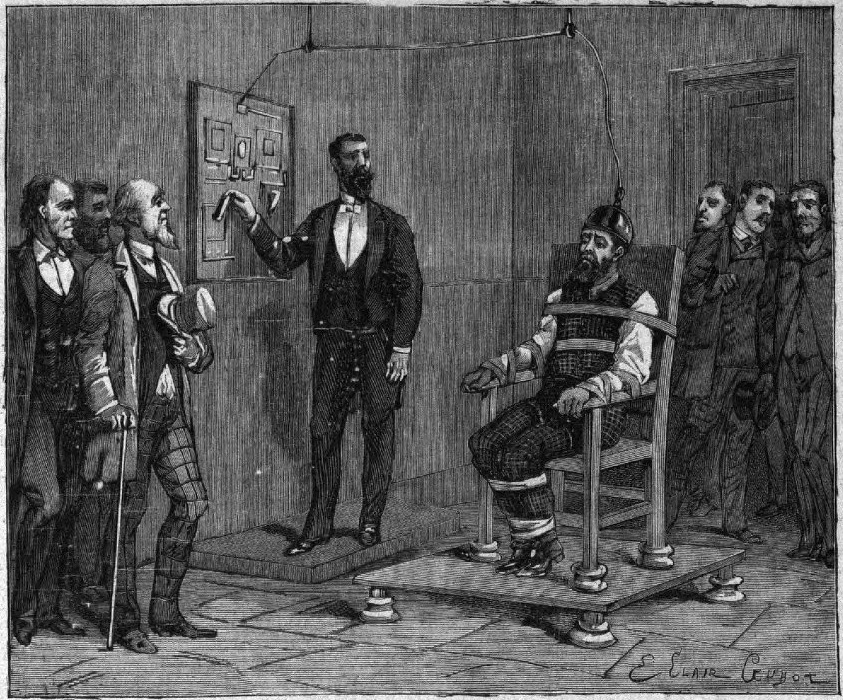
    Kemmler_exécuté_par_l'électricité

    As civilization has moved ever forward, we have shed many of the barbaric practices of the past. Practices such as killing undesirables by brutally hanging them. Instead, we started brutally killing them with electricity. Hanging is far from pleasant, instead of the intended broken neck, convicts often would asphyxiate—a slow and painful process that could take up to half an hour.

    The state of New York saw its first execution by electrocution on August 6, 1890. Edwin Davis was the executioner charged with ending the life of William Kemmler, a convicted murder. Both men understood the significance of the event, and Kemmler is reported as hamming up his fifteen minutes of fame with a wild stage bow.

    The thing about new technology is that it doesn’t always work on the first try. The first pull of the switch administered a supposedly lethal surge lasting 17 seconds. When the circuit was broken, Kemmler was still alive and trying to breathe. Not to be discouraged, Davis again pulled the switch, though the second shock went on for more than a few minutes. Apparently, the effects of the electrocution were so horrible that a reporter who was present fainted, and witnesses gagged at the smell of Kemmler’s charred flesh.

    After a 24 year career, Davis retired in 1914. From his time as a ‘prison electrician’ (a misleadingly mundane job title by today’s standards) Davis administered lethal doses of electricity to more than 300 people in multiple states. While some men who dealt death to convicts had trouble sleeping at night, Davis was a different sort of man. He boasted about his work and was even the builder of the first electric chair back in 1890.

    9. John Hulbert

    Sepia toned image showing powerlines/ phone lines, on wooden pole, high in the sky , holyoke, massachusetts

    Edwin Davis was an accomplished executioner with a hefty resume of over 300 electrocutions, and he was boastful until the end. His protégé, a man named John W. Hulbert Jr., was less enamored with the grisly business of killing people. Hulbert took over for Davis when he retired, and retired himself in 1926.

    During his career he was responsible for the deaths of over 140 convicts, but he never shared his mentor’s enthusiasm. When asked about his retirement, Hulbert said “I got tired of killing people.” The stress associated with his job was more than he bargained for, and his fears got the best of him.

    When he went out, Hulbert was armed with a gun for fear of reprisals from friends or relatives of the convicts he had executed—remember there were more than 140. He built up a routine to protect himself in other ways too. After he performed his obligation to the state and to justice he would dine at the same restaurant. He would always order the same meal and he relied on one single waiter who was generously compensated. Hulbert lived in constant fear that his food would be poisoned as a retribution for a death caused at his hands.

    In the end, it turned out that he had nothing to fear from strangers. It was the stress of his grim profession and perhaps some imbalance within in him that ended John Hulbert’s life. In 1929, he went down into his basement and took his own life with a gun.

    8. Robert Elliott

    Singchair

    Next in the line of executioner succession is a man named Robert Elliott. Like his predecessor, Elliott was a private and worried man who attempted to conceal his identity for fear of the repercussions associated with being a state sanctioned killer. Despite his attempts, his name became public less than a year after he began his career and he became the recipient of a host of threatening letters. The worst of these was a bomb hurled at his house. While the front porch was destroyed Elliott was unharmed.

    Topping the career of Edwin Davis he successfully executed 386 convicts on behalf of the state and of justice. While he was officially employed in New York, he also carried out executions in several other states. While Hulbert’s career slowly ate away at his insides and began to unravel his psyche, Elliot was apparently unfazed by the tremendous weight of his position. It wasn’t until he eventually penned his memoirs that people learned his true feelings on the topic of capital punishment.

    Elliott went to church every Sunday, and his spirituality can be found in his assessment of the death penalty. Elliott firmly believed that justice and revenge should be carried out by God, not by men. The way Elliott saw things, he carried out his duties to ensure that at the very least the condemned men whose lives he took did not suffer.

    7. Joseph Francel

    Nebraska's electric chair is seen in Lincoln, Neb., Monday, April 16, 2007. When the state of Nebraska tries to kill death row inmate Carey Dean Moore with 2,450 volts in the electric chair May 8, some expect movement after the jolt, from Moore's heart. The macabre image of an inmate in the chair with a beating heart possibly several minutes after the state tries to put him to death isn't drawn by somebody trying to scuttle the execution. It comes from the Florida doctor who devised the new, untested execution protocol that Nebraska has adopted after a judge rejected the old one. (AP Photo/Nati Harnik)

    Like Elliott and Hulbert before him, Joseph Francel resisted the scrutiny of the public eye as an executioner. He worked in Sing Sing from 1939 to 1953, and try as he might, his involvement in the sentences of several high profile convicts.

    Described as a soft spoken man from the Catskill Mountains, a rural and mountainous region in upstate New York, Francel was responsible for the executions of 137 convicted men and women. Several famous mobsters met their end when he pulled the switch, two of whom were the Rosenbergs. Julius and Ethel Rosenberg met the electric chair through a conviction that they were stealing atomic secrets for sale to the Soviets. While the execution of Julius Rosenberg went smoothly, his wife required a second dose of electricity. This raised eyebrows, and concerns were raised that she died inside the Jewish Sabbath.

    Citing poor pay and friction with prison administration, Francel resigned. Records indicate that his compensation per execution was competitive: he was paid $150 per electrocuted convict.

    6. James Van Hise

    EXECUTION_BY_ELECTRICITY_electric_chair_illustration_Scientific_American_Volumes_58-59_June_30_1888

    While the first electrocution occurred in New York in the year 1890, it wasn’t until 1907 that the first state sanctioned execution involving an electric chair occurred in New Jersey. It was turn of the century execution heavy hitter Edwin Davis that pulled the switch both times. Davis’ execution in the Trenton state prison was the first of many, but in other parts of New Jersey, the state retained a sour veteran hangman by the name of James Van Hise.

    After hanging 250 convicts throughout the course of his career, Van Hise was sitting in the hot seat (so to speak) for replacement. The modern world was looking down on the barbarism that accompanied hanging and instead sought the clean and humane approach of death by electrocution. More electrocutions meant less hangings, and while Edwin Davis would go on to make more money, Van Hise was facing replacement.

    To remedy the often unreliable and grotesquely inhumane act of hanging—and to prevent his trade from fading into history—Van Hise decided that a counter weight that would pull upwards on the victim’s neck was a more reliable method that relying on gravity and the drop to break a convict’s neck.

    The first time Van Hise was afforded an opportunity to test out his new invention he was in one of his characteristically unpleasant moods. He hurried convicted wife-killer Edwin Tapley onto the gallows and cut his last words short with the traditional black execution hood. The weighted system was an unmitigated failure. It took nearly fifteen minutes for Tapley to expire, and Van Hise never lived down his backfired attempt to build a better mouse trap.

  • 10 Bizarre Phobias You Have Never Heard of

    10 Bizarre Phobias You Have Never Heard of

    It is common to mistake worry, fear, or concern for a true blue phobia. The reality is that a phobia is so much more than just a little anxiety. It is a debilitating and, more often than not, unfounded and baseless terror. Phobias can manifest themselves in a variety of ways. We’re all familiar with the common ones, such as arachnophobia (the fear of spiders), but there are some odd ones out there that you just won’t believe.

    10. Agyrophobia – Fear of Crossing the Street

    Oxford_Street_December_2006

    Like many phobias, people afflicted with agyrophobia are not terrified of just the act of crossing the street but of falling or being struck by passing motorists. It can also manifest itself as simply a fear of blind corners, or wide avenues or thoroughfares where the person suffering could potentially be injured. Of course, looking both ways before crossing, using common sense, and staying off your phone will mostly keep you safe but those suggestions fall on deaf ears for agyrophobics.

    It is worth noting that this phobia is not the same as a fear of cars or the fear of riding in a car which is referred to as amaxophobia.

  • 10 Terrifying First-Hand Accounts of Sleep Paralysis

    10 Terrifying First-Hand Accounts of Sleep Paralysis

    It can be tough to get up in the mornings. Now imagine that you wake up, and you go to rise but you can’t move. Your chest is tight and your breathing is labored. You realize that you’re not alone in your room, maybe not even alone in your bed but you can’t turn to look or to defend yourself. All you can do is stare blankly at the ceiling while panic rises in your stiff body, and your voice stays locked in your throat.

    The accounts that are related here are often first hand, though due to the nature of sleep paralysis and the fact that they are the product of waking dream state, readers should bear in mind that while these people may have believed this was happening at the time, science tells us otherwise.

    10. Turn off the Light

    Adam, a student, dozed off on the open pages of his textbook. As he nodded off, he remembered that he could hear the faint sounds of a TV downstairs. He awoke to find the room as he had left it; the light on his nightstand still on and his textbook in his hands. The first thing that seemed out of place was the fact that the room was freezing cold.

    Adam was sure he could feel someone’s eyes on him, though he was alone in the room. He attempted to rise but his limbs were lead and his locked legs kept him in place. He began to panic, unsure of what was happening. The feeling of being watched grew stronger until it reached a crescendo of silence and stillness when the lamp clicked off next to his bed.

    Still paralyzed he struggled internally to rise. Out of the blackness in his frigid room, Adam saw an old man floating toward his bed. The man’s eyes were nothing but bloody sockets and he was screaming and grabbing at Adam as he raged towards him.

    When he again awoke, Adam recognized his nightmarish attacker as his deceased grandfather.

  • Top 10 Most Common Scientific Myths

    Top 10 Most Common Scientific Myths

    Despite the tremendous advances that the scientific community makes every year, there are still common misconceptions that, for whatever reason, have survived though they have no basis in fact. In an effort to set the record straight, let’s take a look at ten of the most common science myths and do a little busting (myth-busting that is).

    10. Evolutionary Improvements

    Caribbean_reef_shark

    It is a commonly held misconception that evolution is the process of an organism or species to progress from ‘lower’ to ‘higher’. While scientists can point to concrete examples of evolution and natural selection hard at work, there are also numerous examples of instances where the inverse is true. Ideally, the natural progression of evolution means that only the best traits of a species are passed on through successive generations but let’s take a look at a couple of scenarios where that has not been the case.

    Look at sharks, crayfish, and many types of fungi. There is evidence that these organisms have remained largely unchanged for hundreds of thousands of years, millennia in some cases. These organisms were so well suited for their habitats that there has simply been no need for a change—for a long, long time. In these cases, evolutionary changes could actually decrease the suitability of some of these organisms for their environment meaning that evolution in this instance would be devastating for the longevity of the species.

    9. Humans Pop in Space

    astronaut-11050_1920

    Space is a nasty place for just about everything but rocks and dust. Somewhere along the line people got it into their heads that if a person goes out into the vacuum of space they will pop from the inside out like a marshmallow in a microwave.

    While this myth may be an excuse to add some gory special effects to science fiction films, the reality is that a person can, in fact, survive in space for up to 30 seconds as long as they have exhaled before exposure. If they have inhaled, their lungs can burst or collapse and cause an influx of air into a person’s bloodstream. Either way, after 30 seconds or so, an unprotected person in space will pass out and die from a lack of oxygen.

    8. Brightest Star

    Sirius_A_and_B_artwork

    For as long as we have explored the globe we have relied on the stars for navigation. The most famous of the navigational stars is Polaris or the North Star. It is a common, and false, held belief that Polaris is the brightest star in the northern hemisphere’s night sky. This is understandable, considering the fact that many explorers have relied on it and there have been countless people who have found their way through stellar navigation.

    In fact, it is the star Sirius that is brightest in the Northern hemisphere’s night sky with a magnitude of 1.47. The lower a star’s magnitude, the brighter it is and Sirius wins out over Polaris’ magnitude of 1.97.

    7. The Five Second Rule

    bacteria-426997_1920

    The five-second rule is a product of two things; pseudo-science and the desire of people to reclaim food that would otherwise be lost when it falls on the floor. For those who may not be familiar, the five-second rule states that food that is dropped on the floor will be safe to eat, or relatively bacteria and germ-free, if retrieved within five seconds.

    The five-second rule has absolutely no basis in fact. There is no grace period where food will be impervious to bacteria—if food falls on the floor it will immediately pick up any germs it comes into contact with. There is some variance with the consistency of the food in question. Wet foods will pick up more germs than dry ones, but there is no such thing as a five-second rule.

    Of course, while eating food off of the floor may be disgusting, it is often not actually dangerous or unsafe; just save it for when you’re alone or with friends. Diners at a restaurant may frown on you eating straight from the floor.

    6. Dark Side of the Moon

    Gibbous_Moon

    Contrary to the title of the Pink Floyd album, there is, in fact, no such thing as a dark side of the moon.

    In reality, there is no part of the moon that is not illuminated by the sun at some point. While it is true that there is a side of the moon can never be seen from the Earth that does not mean that it is never struck by rays of light from the sun. This is due to a circumstance known as tidal locking. The gravitational pull that the Earth exhibits on the Moon is so strong that the Moon stays immobile in orbit. While it circles the earth, it does not spin on its own axis.


    5. Brain Cells

    neurons-582054_1280

    You may have heard that you should be careful racking up a massive bar tab; not only does money not grow on trees, but your brain cells can’t regenerate. Once they are gone they are gone and your brain will not regenerate any new ones to replace the lost cells.

    This is such a prolific misconception because the scientific community wholeheartedly believed it for some time. In 1998 however, scientists discovered that brain cells in adults can in fact regenerate. Researchers are still working out exactly how to leverage this information for the benefit of the healthcare community, but when the inevitable breakthrough occurs there is hope for the combating of previously untreatable degenerative cerebral diseases.

    4. Pennies from Heaven

    OLYMPUS DIGITAL CAMERA

    You may have heard that even a small object if dropped from a significant enough height, can accelerate to speeds that can be lethal for people below. This is evidenced in the popular urban legend that a penny dropped from a very high building (such as the Empire State Building) can kill a pedestrian on the sidewalk below.

    The reality is that the flat sides of a penny give it such air resistance that it cannot achieve lethal speeds. There is simply not enough of an aerodynamic profile for a penny to kill, though it will probably leave a hell of a bruise. While it would be exceedingly difficult to try an ultra-high penny drop in a vacuum, the lack of air resistance would allow the penny to reach terminal velocity, perhaps fast enough to kill.

    3. Friction Heat

    purple-690724_1920

    It is common knowledge that many of the objects from outer space that strike the Earth burn up on entry to the atmosphere. The myth is that this heating occurs from the friction of the meteor (or piece of a satellite, etc.) is caused by the friction of the air passing over the rapidly accelerating object.

    This isn’t entirely true. While the heating has to do with the air, it isn’t friction that causes the rise in temperature. When the object is speeding toward the ground, locked in Earth’s gravitational pull it is actually rapidly compressing the air in its path. This compression causes the material to heat up and glow, a glow that can be seen if you happen to be looking in the right sector of the night sky. We know them as shooting stars.

    2. Lightning

    lightning-399853_1280

    You may have heard that lightning never strikes the same place twice. This isn’t true, seeing as there are many places that are frequently struck by lightning.

    Lightning is a function of the release of a charge buildup in both the ground and a charged cloud. Electricity opts to take the path of least resistance so therefore the tallest landmarks are more prone to strikes. Skyscrapers are frequently struck, sometimes as often as 20 or 30 times a year.

    Remember that fact next time you’re caught outside with a storm on the horizon. Stay away from open fields or parking lots; you don’t want the tallest thing around to be you!

    1. Gravity in Space

    star-422756_1280

    It is a common myth that there is no gravity in space. This is understandable, considering all of the footage we see of floating astronauts swimming through their spaceships and walking on the ceilings.

    The truth is that they are still being pulled toward Earth by the planet’s gravitational pull. They are at the orbital ‘sweet spot’ however, a distance that means that they are still falling ‘downwards’ but are at the right distance that they are always falling tangent to the planet and therefore will remain floating. It is for this same reason that satellites don’t come crashing back to the surface and that the moon doesn’t collide with the Earth.

  • The 20 Highest Murder Rate Countries in the World

    The 20 Highest Murder Rate Countries in the World

    I sincerely hope that the readers of this article can walk the streets of their neighborhood in safety and security. I also hope that they can sleep safe in their beds. Unfortunately, this is not the case for everyone. We know that the modern world is full of new, and unforeseen dangers, but there is one danger that has been with us since the dawn of time; the darkness of man and the inhumanity of human beings.

    This article examines the 20 countries worldwide that have the highest murder rates. This information is provided by the United Nations Office on Drugs and Crime, and it is measured by the number of homicides per 100,000 inhabitants per year.

    20. Mexico, 21.5/100,000

    mexico

    Bordering the US to the north, and Guatemala to the South, Mexico is the fifth largest country in the Americas by area—it encompasses almost 2 million square kilometers or 760,000 square miles. Additionally, the country’s capital of Mexico City is the second largest in the hemisphere. It is no secret that drug cartels have a powerful grip in Mexico, and as a result disputes can turn lethal with sometimes public and gruesome murders.

    19. Saint Lucia, 21.6

    St Lucia

    Though the physical number of murders is low compared to larger nations, Saint Lucia’s small population means that a shockingly high percentage of the population is murdered each year. In 2007 there were 27 reported murders, a number that has since doubled and when compared to the Caribbean nation’s population of only 175,000 the murders-per-capita rating is very high.

    18. Dominican Republic, 22.1

    dominican republic

    The entire population of the Dominican Republic is only a little higher than that of Mexico City, but many of those people live in fear. The Dominican Republic is the second largest Caribbean country and, like Mexico, suffers from high numbers of drug trade related murders. The Dominican Republic is said to serve as a waystation or point of transit for many Columbian drugs headed for Europe or the US.

    Not surprisingly, Columbia has its own spot a bit further down the list, though they aren’t entirely to blame. The Dominican Republic is frequently criticized as being ‘soft’ on convicted criminals.

    17. Rwanda, 23.1

    Rwanda

    While many of the murders in South and Central America are motivated by the drug trade, Rwanda has been the site of a much darker side of humanity’s capacity to do evil. It was within the country’s borders that some of the most atrocious acts of genocide were carried out to an extent that is rarely matched in history. The depth and breadth of crime doesn’t stop with murders: the country is also home to high rates of rape, robbery, and other violent crimes.

    16. Brazil, 25.2

    brazil

    Brazil is the largest country in South America, and it is also the most populous. Over 200 Million people call the country their home, and the city that beat out Mexico City for high population? Sao Paulo Brazil. A high population means that the normal by products of society are amplified in a myriad of ways, and homicide rates are no exception. In the year 2012 alone, 65,000 people were killed with the chief suspected culprits being alcoholism and the latent drug trade.

    15. Saint Vincent and the Grenadines, 25.6

    saint vincent

    Saint Vincent and the Grenadines is one of many very small Caribbean island nations. In total, the country claims a land mass of 390 square kilometers (150 square miles). Considering the homicide rate per capita, it stands to reason that blood has been spilled on every square mile of those islands, and like some other countries on this list murder isn’t the only thing keeping law enforcement busy. INTERPOL statistics suggest that rapes, robberies, aggravated assaults and burglaries are also quite common.

    14. The Democratic Republic of the Congo, 28.3

    congo

    The Central African nation known as the Democratic Republic of the Congo is known for being rich in natural resources. Many of these resources stay trapped in the ground however, as the Republic of the Congo is heavily destabilized due to constant and devastating civil war. Additionally a lack of national infrastructure and systemic, pervasive corruption have produced nearly limitless opportunities for high levels of criminal activity.

    13. Trinidad and Tobago, 28.3

    trinidad

    Based on its high income economy and small population, the Caribbean island nation of Trinidad and Tobago is the third richest country per capita in the Americas. It places after the US and Canada in that race but well ahead of either nation in terms of murders per capita.

    12. The Bahamas, 29.8

    the bahamas

    The Bahamas consists of a collection of more than 700 islands that sit in the Atlantic Ocean. Like many of the nations in the Caribean, the Bahamas have struggled with high rates of murder, and as a result in 2013 120 people were killed. Coupled with the nation’s population, this puts their homicide rate per capita at a whopping 30.

    11. Colombia, 30.8

    columbia

    Columbia is a highly stratified and segregated society with deep class divides. The majority of the population is poor, and there is the ever-present drug trade. With drugs and social unrest come violence; not just murders but other violent crimes as well. Columbia is a hot bed of kidnappings, robberies, aggravated assaults, and other crimes.

    10. South Africa, 31

    south africa

    The good news for South Africa is that the murder rate is experiencing a decline. The bad news is that it is still hovering around approximately 50 homicides a day. In light of these facts one may be lead to believe that the country’s nick name of ‘The Rainbow Nation’ is a misnomer, considering that 50 of it’s 54 million citizens are dying or killing one another every day.

    9. Saint Kitts and Nevis, 33.6

    saint kitts

    Saint Kitts and Nevis is the smallest sovereign nation in the Americas both in square mileage and in population. Located in the West Indies, only about 50,000 people make their home her. Due in part to the country’s small population, even a moderate murder rate would register highly when estimated on a per capita basis and despite being a truly miniscule nation, Saint Kitts is inside the top ten on this list.

    8. Swaziland, 33.8

    swaziland

    From smallest in the Americas to one of the smallest in Africa, the trend should be now visible. Surrounded on many sides by South Africa, the population of Swaziland (totaling a mere 1 million) faces frequent homicides and other daily challenges. Swaziland is also home to a host of deadly diseases and many citizens live in conditions of extreme poverty bordering on privation. The result? An average life expectancy of Swaziland’s citizens that is just 50 years.

    7. Lesotho, 38

    lesotho

    Like Swaziland, Lesotho is small, dangerous, and largely poor. Almost half of the country’s population lives at, or well below the poverty line. This socio economic position tied with other challenges contribute to the astronomical murder rate.

    6. Jamaica, 39.3

    jamaica

    Back to the Caribbean, Jamaica has garnered a reputation for danger and instability. The small island nation occupies and area of only 11,000 square kilometers (4,250 square miles) but is just outside the top five for our list. Warring factions constantly vie for control of the capital Kingston, and shootouts in the street are a common occurrence.

    5. Guatemala, 39.9

    Guatamala

    The Southeastern neighbor of Mexico sees about 100 murders a month with a population of nearly 16 million. An avenue for the Northward flow of drugs, Guatemala has been sucked into the same pattern of violence and homicide as many of the nation’s Central and South American neighbors.

    4. El Salvador, 41.2

    el salvaor

    While drugs are present in the Central American country of El Salvador, the real cause of turmoil and unrest is a lengthy and devastating civil war that tore the country apart. Though the war has been over for more than two decades, the country still sees a significant amount of local and gang-related crime. Law enforcement estimates that as many 60% of the murders that occur in El Salvador are part of gang disputes over territory.

    3. Belize, 44.7

    Belize

    Belize is the least densely populated country in Central America with only about 340,000 people spread out over 22,800 square kilometers (8,800 sq mi). Despite the country’s natural beauty, the dark heart of man is present in an alarmingly high homicide rate. The Belize City district—in 2007—was home to more than half of all murders in the country.

    2. Venezuela, 53.7

    Venezuala

    Venezuela is a unique South American country in the sense that the country is a world player in the oil exportation industry. Changing regimes, political instability, and faction gangs are just some of the many reasons why only 19% of residents said that they felt safe when walking alone at night.

    1. Honduras, 90.4

    Honduras

    With a population of 8.25 million and a staggering murder rate, statistically speaking nearly one in every one thousand citizens will be murdered. Because Honduras is a high-demand tourist destination, tragically many of the victims of violent crimes are tourists, though citizens are just as at risk in what could reasonably be called one of the world’s most dangerous places to live.