Blog

  • 6 Time Slip Mysteries

    6 Time Slip Mysteries

    When it comes to paranormal activities, most people would have a laugh and quickly dismiss it. I mean, after all there is no such thing as ghosts, aliens, demons and spirits right? In recent times, there have been quite a few discoveries that were made via science which explains that our universe may not be as simple as we think of it to be. There is a lot of phenomena that us humans, even with the help of science, cannot fully comprehend. Listed below are the examples of 6 such events.

    1. Disappearing Houses

    hut-209466_640

    In 1971, two men in Oklahoma were working for a live feedstock company when they were called to pick up a dispenser from a certain area. When they reached the place, they saw the dispenser half full and decided to pick it up later. Before leaving, they noticed a large house sitting on a hill nearby. It seemed to be abandoned. The next day when they came back to pick up the dispenser, they found the house gone. There was no debris or any sign of it ever being there.

    2. Changing Hangars

    aviation

    In 1935, Royal Air Force Air Marshal Sir Victor Goddard was flying from Edinburgh, Scotland to Andover, England. On his way, he passed over an abandoned airfield, with overgrown vegetation and an almost collapsing hangar. Soon, there was a big storm which caused Goddard to nearly lose control of his flight. After the storm had passed, Goddard realized that his plane was going in the reverse direction. He came across the same airfield once again but this time it was lively, filled with working planes and mechanics on duty.

    3. Century Old Dancing

    dancing-old

    This might not be as weird as the other points, but a 30-year-old woman who suffered from paralysis had once visited Marakhuasi in Peru. She and her friends went exploring in the woods and came across a stone cabin. She heard some strange music being played from the cabin and upon a closer look she saw that there were people dancing inside, all dressed in 17th-century dress. Before she could investigate further, she was pulled away by her friends. Nobody ever found out what was actually going on in that cabin or how the woman ended up being paralyzed after that.

    4. Road Trip

    road-690087_640

    In 1969, two men were driving on an empty Louisiana Route 167 en route to Lafayette from Abbeville. On their journey, they encountered an antique automobile traveling in the same direction. The vehicle was something from the 15th century, it was in pristine condition and had 1940 written on the license tag. They were even more surprised to find a lady behind the wheels who was dressed in 14th-century clothes as well as a little boy behind her. The two guys asked if she needed any help and as they pulled over in front of her, they looked back to see the lady had vanished into thin air. Apparently, the same thing happened to another traveler who was a few miles behind the two men.

    5. Inhuman Pursuers

    Source
    Source

    In 1972, a group of girls was on a road trip but somehow got lost. They found themselves on the edge of a cliff with no familiar surroundings. They got scared and managed to drive back in the hope of getting onto known territory. They came across a tavern and saw two men leaving. One of the girls opened her window to ask for help and the men started to shout all of a sudden and the girls quickly sped away. The two men were apparently chasing the girls in a futuristic egg-shaped vehicle. The girls managed to lose their pursuers and get back on a familiar track. The girl who shouted later reported that the two men did not look human at all.

    6. War Story

    war-story

    German journalist J. Bernard Hutton and his colleague, photographer Joachim Brandt were sent to do a story at the Hamburg-Altona shipyards. While they were checking out the area, the sound of an air raid could be heard from above them. There were lots of plane flying above and the bombs were being dropped from the sky, exploding all around them. The two gentlemen rushed into their car and fled the scene. As they left the area, they looked back to see the sky all clear with no noise at all. Their pictures showed no abnormality either. However, eleven years later, that very same place was bombed by the British Royal Air Force. Was it possible that the two journalists somehow zoomed into the future for a brief moment?

  • 6 of the Most Expensive Electric Cars

    6 of the Most Expensive Electric Cars

    Whether or not electric cars actually help the environment is a subject of debate these days. One recent study concluded that a person driving an electric car who used energy produced by a coal-fired power plant is actually doing more damage to the environment than they would if they drove a conventional gasoline-powered vehicle.

    Some of the more recent developments in the technology used to manufacture electric cars is allowing some manufacturers to build electric cars that are much more powerful than ever before. There are also more models that could be considered luxury vehicles, making electric cars a more tempting choice for people that are accustomed to expensive things. This list of the most expensive electric cars is interesting.

    1. Rimac Concept One

    It’s obvious from this first entry that many of these ultra-expensive electric automobiles will have names that are not at all familiar to those of us that don’t own our own island or luxury yacht. That may be just as well since this exotic electric hotrod’s price tag could trigger a fatal attack of “sticker shock!” It’s retail price is listed at $980,000, which is only $20,000 shy of a million dollars! For that price, buyers could reasonably expect to get something pretty special in return, and if you consider that this is the fastest electric car in the world, that would probably do the trick for many potential customers. This electric rocket on wheels can reach speeds of up to 310 miles per hour (500 kmh). When fully-charged the Rimac Concept One will take you about 370 miles, and do so very quickly if you desire.

    2. Mercedes Benz SLS AMG Electric Drive

    Image Source: Teymur Madjderey
    Image Source: Teymur Madjderey

    The name Mercedes Benz is certainly not unfamiliar to most people and is recognized worldwide as being synonymous with luxury automobiles. This limited edition sports machine is the electric equivalent to the German auto maker’s gasoline-powered SLS AMG and it carries a very hefty $544,236 price tag. Even though it has four electric motors on board, its top speed of 155 miles per hour (250 kmh) pales in comparison to some of the other electric speed demons on this list.

    3. Lightning GT

    Image Source: Alan
    Image Source: Alan

    British auto maker Lightning is now in the electric car business and the Lightning GT is the first all-electric automobile they have offered. The car is expected to retail for somewhere around $300,000 and their current plans involve offering just 20 models for sale, so competition among would-be buyers could be pretty fierce. This electric car is reportedly capable of going from 0 to 60 miles per hour in five seconds and it’s top speed is 130 miles per hour (209 kmh).

    4. Eliica

    Image Source: Nobuyuki Hayashi
    Image Source: Nobuyuki Hayashi

    An electric car is a pretty unique concept to begin with but the engineers and designers at Keio University in Tokyo have definitely taken it to a whole new level with the introduction of the Eliica. Their 8-wheeled car looks more like something that might be seen in a 1960s science fiction movie! It’s extremely unique appearance sets it apart from the other sleek-looking models on this list and frankly, this car borders on downright ugly. The designers appear to be betting heavily that wealthy individuals will be willing to part with $225,000 to own one of these bizarre-looking automobiles. Despite it’s clunky appearance, the Eliica can get up and move out when it wants to. It has a top speed of 230 miles per hour which is more than sufficient to leave most stock gasoline-powered cars in the dust. There’s no question that driving down the street in one of these oddly retro-futuristic automobiles will turn a lot of heads.

    5. Audi R8 e-tron

    Image Source: Audi USA
    Image Source: Audi USA

    This is probably not the electric car the buyer with a serious need for speed will be interested in. It’s the slowest car on the list with a top speed of 125 miles per hour (200 kmh) and it can go from a standstill to 62 miles per hour in 4.2 seconds. The Audi R8 e-tron is powered by four electric motors that each output 140 kW of power. Audi decided to produce only a small number of these automobiles that are priced in the $150,000 vicinity. This electric sports car was definitely designed to look more like a racing car than most of the other entries on this list.

    6. Tesla Roadster Model S

    Image Source: Wayne Hsieh
    Image Source: Wayne Hsieh

    Unlike the Rimac or Eliica, the Tesla brand is likely to be familiar to a lot more people even if they don’t have any plans to by an electric car. It’s only a select few, however, that will have any serious intention of getting a Roadster Model S of their own since they are priced at $119,720 for the top-of-the-line model. Even so, it is a heck of a lot less than you would have to pay for a Rimac Concept One. The Tesla won’t get you to your destination as fast as the Rimac, in fact its top speed of 130 miles per hour (209 kmh) is less than half that of the Concept One. Still, driving a Tesla is likely to impress your friends, and by most accounts, they are pretty cool cars.

  • Health Benefits of Sardines

    Health Benefits of Sardines


    Often overlooked, these small and smelly fish were thrust into greatness by Napoleon Bonaparte himself. He took a liking to them and as such they became known as a delicacy. The name originates from the Italian island of Sardinia, and since Napoleon’s day, these salty fish have been canned and shipped all over the world. Here are some benefits to your health that Sardines offer.

    High in Vitamins B2, B3 and B12 and Tryptophan

    Sardines are rich in vitamin B12 and they are also a good source of tryptophan. Vitamin B12 contributes to circulatory and nervous health, and tryptophan is an essential amino acid that aids in the production of serotonin—the compound that balances mood.

    Additionally, they have high levels of vitamins B2 and B3. Vitamin B3 (niacin) is an essential component in skin, nervous and circulatory health. Some studies have shown a link between high vitamin B3 consumption and the possible prevention of Alzheimer’s disease. Vitamin B2 is also a key component of a healthy nervous system and is an important part of energy production at the cellular level.

    Rich in Vitamin D and Calcium for Bone Health

    The small sardine is also rich in vitamin D. Vitamin D is an essential nutrient for the development of strong, healthy bones and glowing skin. Combined with calcium, the two work in tandem to slow the effects of age-related loss of bone density and reduce joint inflammation.

    Additionally, vitamin D is contributory to a reduction in the risk of the development of cancer. This essential vitamin helps promote healthy cellular activity which lowers the chances that cancerous activity will occur.

    Rich Omega 3 Fatty Acids Source

    Sardines are in the same family as salmon and mackerel and it’s harder to find a richer source of omega 3 and 6 fatty acids anywhere. Omega 3 fatty acids act as antioxidants for the body. They fight free radical damage and slow the progression of age-related degeneration of cells. They can also reduce the risk of some chronic diseases, including cancer.

    Omega 3s also form the ‘good cholesterol’ or high density lipoprotein (HDL). HDL fights the deposit of LDL (low density lipoprotein) as plaque on artery walls and therefore lowers the risk of cardiovascular disease. Importantly, they also contain elements that strengthen damaged arterial walls, so not only do omega 3s help lower cholesterol, but they also fight against heart disease.

    High in Protein and Phosphorous

    Sardines contain concentrations of protein and phosphorous. Various proteins are put to good use repairing body tissue from everyday stressors. Phosphorous, along with aforementioned calcium, build strong and healthy bones, teeth and gums.

    Due to rampant industrial pollution of the world’s oceans, wild caught fish have been found to have high concentrations of dangerous heavy metals and other industrial waste substances. Due to these high levels of mercury and PCBs, high consumption of ocean fish can have negative health effects. Somewhat surprisingly, sardines have been found to have lower concentrations of these dangerous compounds, meaning that their health benefits are not as compromised as other oily fish.

  • Is It Bad To Eat While Lying Down?

    Is It Bad To Eat While Lying Down?

    Eating is a necessity for man to live. This is one aspect of man that no kind of technological advancement can substitute. The food we eat is the human fuel that keeps us going. Over the past decades, a lot of articles have emphasized how necessary it is for us to eat good food.

    Food hygiene has also been a very common topic nowadays. What we eat, where we eat, and how we eat it becomes the question. Often times you come across people asking this question, is it bad to eat while lying down? This question is most common from kids and youngsters to their parents and a few times the parents to the dietician or doctors. The reason for this question could be based on the individuals’ love for lying down while eating through habit, such as when watching the latest movie on Netflix, or multitasking with a games console pal, whilst stuffing their faces with pizza; or maybe first thing in the morning when having breakfast in bed.


    Recent research has shown that our posture while eating greatly affects how well the food digests. Just as you don’t expect the flow of water from the top of a hose down to be the same with its flow from one end to another. Research also shows that sitting while eating, as opposed to lying down, makes us subconsciously eat slower, and be more focused on the meal, which helps our food digest properly.

    eating-in-bed

    One of the risks associated with lying down while eating is slow motility and delay in digestion unlike if you are sitting. Eating while lying down is also a known risk factor of reflux esophagitis. It can also result in heartburn or GERD, a syndrome where the lower esophagus does not close off properly after swallowing. This usually allows the stomach and food acid to move up from the stomach into the esophagus. Heartburn is a burning sensation around the chest area where the esophagus is located and the best way to prevent this is to sit while eating. A lot of people have suggested many things as the disadvantage of eating while lying down but most of these side effects are mere assumptions and speculations. No research has proved these assertions to be true. Apart from the above-listed effects like heartburn and slow digestion and in rare cases, cancer it affects have never been worse.


    So the answer to the question, ‘Is it bad to eat while lying down?’ is partial yes. So you can go on if it suits you but always remember the side effects. Doing it isn’t likely going to kill you or cause any serious harm apart from those listed above. At the end of the day, it’s your decision to make, but just like your mother and doctor have said it is more advisable to sit while eating. Serious tiredness and sickness are however different situations altogether. So what are you waiting for? Sit up and be comfortable as this will really help speed up your digestion.

  • Is It Bad For Dogs To Eat Cat Food?

    Is It Bad For Dogs To Eat Cat Food?

    Dog owners know that there is very little that a dog won’t eat if he can get a hold of it. Wild dogs will hunt in packs, but they have no problem subsisting off of scavenged food that may be as many as several days old. This scavenged food could be the remains of another animal’s kill, a baby animal that didn’t make it, or the feces of another large forest animal. All of that is pretty gross, but wild dogs have a stomach for it, and when it comes to survival, a meal is a meal.can-dogs-eat-cat-food

    A long time ago, before they were man’s best friend, wild dogs—wolves really—were hunters and scavengers but there was a third option. After realizing that they could follow roaming tribes of humans and benefit from their scraps and settlements, these pre-domestication wolves overcame their natural fear of humans and began to live in harmony with them.

    The prehistorical details are fuzzy, but experts believe that one of two things happened: either bold wolves integrated themselves into a mutually beneficial relationship with early people or, alternatively, bold humans stole and raised wolf pups to much the same effect. Either way, the outcome was still the same, and the animals we know as dogs today developed from those early wolves.

    Early dog domesticators took care of their new friends, and as a result the dogs rarely had to hunt for themselves. The dogs were fed scraps from animals that groups of humans could kill, but that the dogs themselves could rarely hope to reliably kill. Life was good.

    Modern dogs are something of an evolutionary far cry from their much wilder and resilient ancestors—regular meals of purpose formulated food is a much better arrangement for them than the odd scraps. This doesn’t stop them from scavenging; knocked over garbage bins and torn packages are the penalty for an inattentive dog owner.

    Dogs, Cats, and their Food

    Aside from whatever scraps hit the floor, dogs have a very strict diet. Dog food is designed to address all of the animal’s nutritive needs, and aside from age-based variations, those needs won’t change. It should come as no surprise then, that cat food is formulated for cats. Of course that won’t stop dogs from getting into cat food, but should they be eating it?

    The short answer is no.

    Cats have different nutritive needs and proportionally speaking they eat less food than dogs, not just because of their size, but the amount of food they eat per pound of body weight is much less than dogs. This means that their formulas are higher in fat, protein, and fibre than dog food and it will be overall much denser. Also, due to the fussy eating habits of cats, their food is much more flavourful and as a result is even more tantalizing to dogs.

    Researchers haven’t fully explored what happens to a dog over time if he or she habitually eats food formulated for cats, but based on what they do know about canine nutrition needs, some inferences can be made. A high protein diet for dogs can inhibit puppy development, and it can reduce kidney function in adults, so there are some long term health concerns for dogs that are chronic cat food eaters. Plus, dogs that are put on specific diets to correct the symptoms of pancreatitis and digestive upset will disrupt their regimens with the high-density cat food.

    A dog that escapes these more serious consequences will certainly fall victim to the most common effect of dogs eating cat food: weight gain. The high density, high fat cat food will pack on pounds without providing your dog with a feeling of being satisfied. Plus, what may be a full meal for a cat can be chomped up in a second by a hungry dog, so while your dog gets fat, your cat won’t be getting the nutrition it needs.

    All of these outcomes are concerns for habitual cat food eaters, but a dog that occasionally breaks the rules will rarely have any serious negative side effects. Some dogs with delicate digestive systems may get diarrhea—sudden dietary changes can cause digestive distress. If this is the case, you can contact your vet to work out a safe dose of Pepto-Bismol for your dog’s age and weight.

  • What to Eat and Avoid For Healthier Teeth

    What to Eat and Avoid For Healthier Teeth

    Although we all know the advantages of brushing our teeth, flossing, and regularly visiting the dentist, there is a lot more to having healthy teeth in what you eat than most people realize. However, by making changes in what you eat and avoid eating, you can actually have a profound impact on your dental health. Here are some foods that are good for your teeth:

    Eggs and Milk

    As expected, milk is at the top of the list for teeth-healthy foods. The reason milk and eggs are both good for your teeth is that they contain high levels of calcium and vitamin D. Calcium is the mineral that strengthens your bone, and vitamin D is what your body needs in order to process it, which is why milk is often fortified with vitamin D. You can also get vitamin D by spending time in the sun.

    Yogurt and Cheese

    These are both dairy products that work similarly to milk to strengthen teeth with calcium, and they also contain phosphorus which helps protect the enamel of the teeth and replaces lost minerals. Cheese is considered to be especially good for your teeth because it has a protein known as casein which also strengthens the enamel.

    Fish, Meat, and Tofu

    Phosphorus, as previous mentioned, is one of the most important minerals for healthier teeth and bones. Foods like meat, tofu, and fatty fish such as salmon all contain high levels of this vital mineral. You can also make broth from meat bones to get plenty of phosphorus for strong, healthy teeth.

  • 10 Reasons Why You Should Cut Down on Sugar

    10 Reasons Why You Should Cut Down on Sugar

    The Dietary Guidelines Advisory Committee recently declared that sugar is the biggest health concern for Americans today, and yet you can find it in everything, starting with your bowl of cereal in the morning on to the ketchup that you add to your burger at dinner. One of the biggest problems is that with most of the American public believing fat to be the dietary enemy, they have turned instead to low-fat versions of foods which are packed with sugar.

    Although small amounts of sugar are beneficial to you and can provide you with energy to keep going throughout your day, the amount of sugar that the average American eats is over twice the amount that is recommended by the American Heart Association. This leads to a myriad of health concerns. Here are 10 reasons to stop eating sugar.

    1. High Blood Pressure

    One of the things that sugar does to the body is it raises blood pressure. High blood pressure can lead to a number of health problems such as heart disease, strokes, heart attacks, kidney damage, and others. Even if you are not overweight but are getting a high percentage of your daily calorie intake from sugars, sugar will cause high blood pressure.

  • 10 Executioners Who Grappled With Their Guilt

    10 Executioners Who Grappled With Their Guilt

    The topic of death is one that will never cease to generate interest, and no one is more interesting than the man who is sanctioned by the state to administer death. He is put into such a unique position; a killer of killers, a righter-of-wrongs so to speak.

    How does someone reconcile their duties with what they know in their heart? Are these men really servants of justice, or are they no better than the men they send on to the next life? Like so much of humanity, the answer often lies somewhere between two of the extremes. What follows is the story of ten executioners who struggled to cope (or didn’t) with the massive burden of responsibility that executioners carry.

    10. Edwin Davis

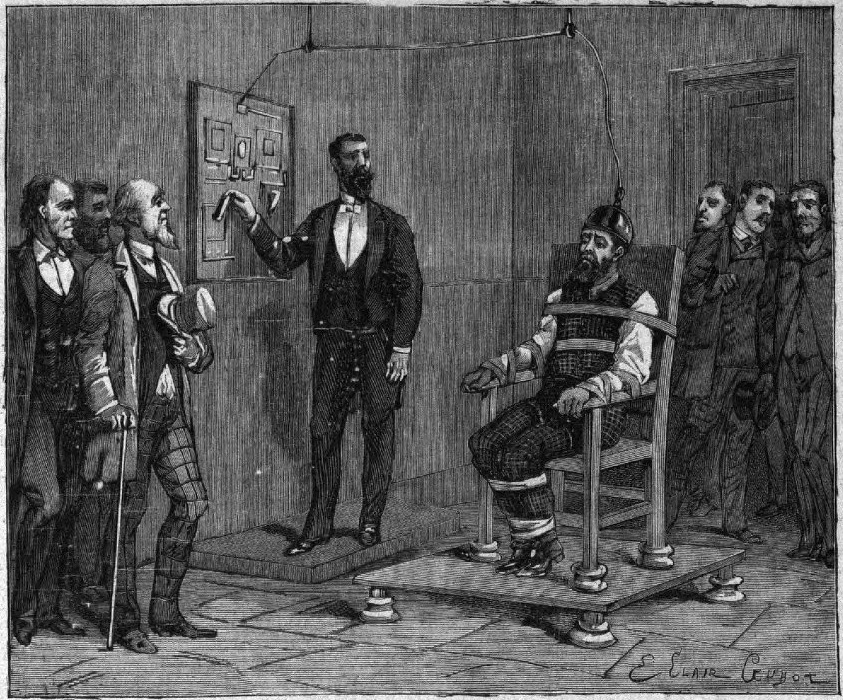
    Kemmler_exécuté_par_l'électricité

    As civilization has moved ever forward, we have shed many of the barbaric practices of the past. Practices such as killing undesirables by brutally hanging them. Instead, we started brutally killing them with electricity. Hanging is far from pleasant, instead of the intended broken neck, convicts often would asphyxiate—a slow and painful process that could take up to half an hour.

    The state of New York saw its first execution by electrocution on August 6, 1890. Edwin Davis was the executioner charged with ending the life of William Kemmler, a convicted murder. Both men understood the significance of the event, and Kemmler is reported as hamming up his fifteen minutes of fame with a wild stage bow.

    The thing about new technology is that it doesn’t always work on the first try. The first pull of the switch administered a supposedly lethal surge lasting 17 seconds. When the circuit was broken, Kemmler was still alive and trying to breathe. Not to be discouraged, Davis again pulled the switch, though the second shock went on for more than a few minutes. Apparently, the effects of the electrocution were so horrible that a reporter who was present fainted, and witnesses gagged at the smell of Kemmler’s charred flesh.

    After a 24 year career, Davis retired in 1914. From his time as a ‘prison electrician’ (a misleadingly mundane job title by today’s standards) Davis administered lethal doses of electricity to more than 300 people in multiple states. While some men who dealt death to convicts had trouble sleeping at night, Davis was a different sort of man. He boasted about his work and was even the builder of the first electric chair back in 1890.

    9. John Hulbert

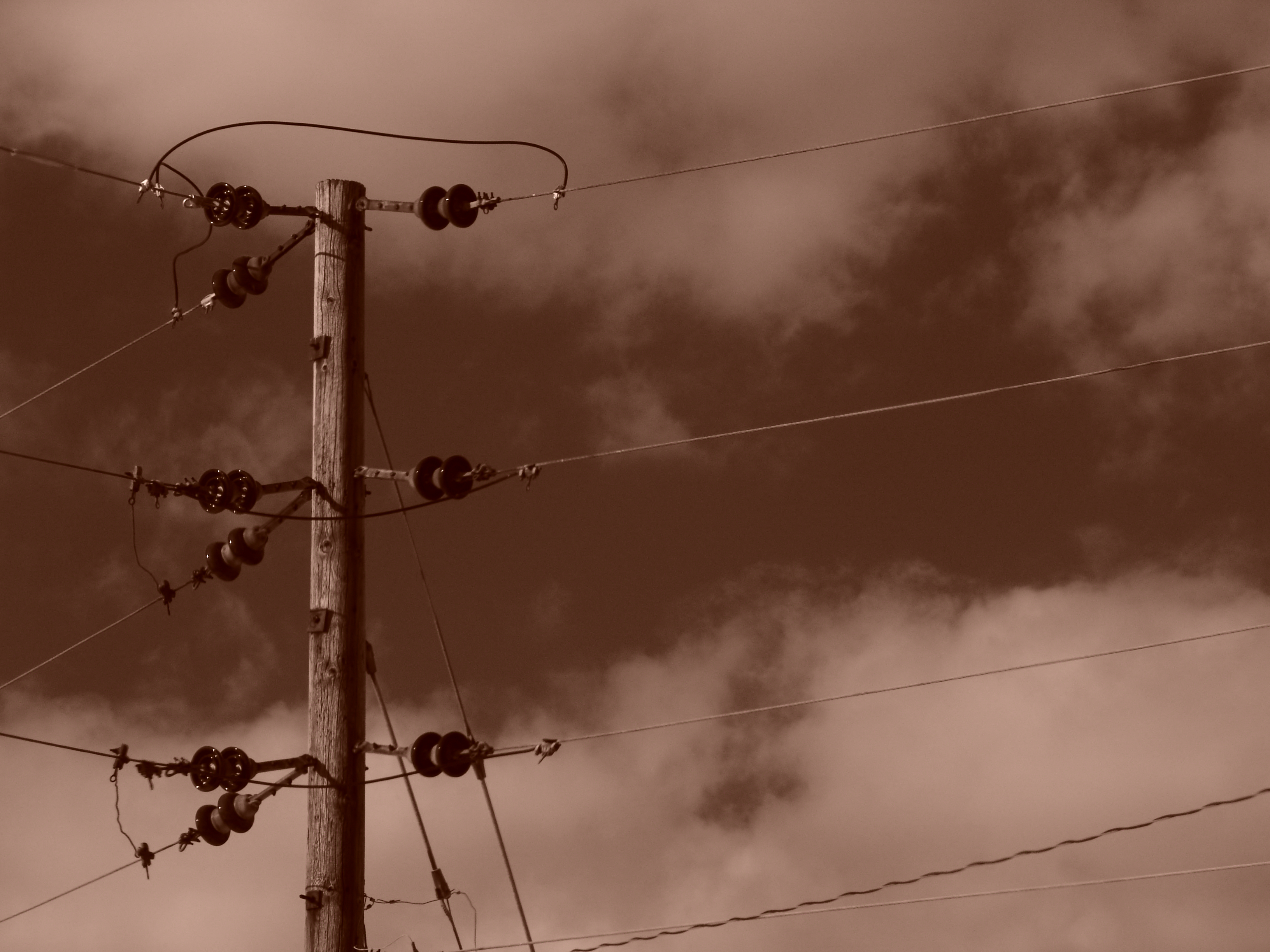
    Sepia toned image showing powerlines/ phone lines, on wooden pole, high in the sky , holyoke, massachusetts

    Edwin Davis was an accomplished executioner with a hefty resume of over 300 electrocutions, and he was boastful until the end. His protégé, a man named John W. Hulbert Jr., was less enamored with the grisly business of killing people. Hulbert took over for Davis when he retired, and retired himself in 1926.

    During his career he was responsible for the deaths of over 140 convicts, but he never shared his mentor’s enthusiasm. When asked about his retirement, Hulbert said “I got tired of killing people.” The stress associated with his job was more than he bargained for, and his fears got the best of him.

    When he went out, Hulbert was armed with a gun for fear of reprisals from friends or relatives of the convicts he had executed—remember there were more than 140. He built up a routine to protect himself in other ways too. After he performed his obligation to the state and to justice he would dine at the same restaurant. He would always order the same meal and he relied on one single waiter who was generously compensated. Hulbert lived in constant fear that his food would be poisoned as a retribution for a death caused at his hands.

    In the end, it turned out that he had nothing to fear from strangers. It was the stress of his grim profession and perhaps some imbalance within in him that ended John Hulbert’s life. In 1929, he went down into his basement and took his own life with a gun.

    8. Robert Elliott

    Singchair

    Next in the line of executioner succession is a man named Robert Elliott. Like his predecessor, Elliott was a private and worried man who attempted to conceal his identity for fear of the repercussions associated with being a state sanctioned killer. Despite his attempts, his name became public less than a year after he began his career and he became the recipient of a host of threatening letters. The worst of these was a bomb hurled at his house. While the front porch was destroyed Elliott was unharmed.

    Topping the career of Edwin Davis he successfully executed 386 convicts on behalf of the state and of justice. While he was officially employed in New York, he also carried out executions in several other states. While Hulbert’s career slowly ate away at his insides and began to unravel his psyche, Elliot was apparently unfazed by the tremendous weight of his position. It wasn’t until he eventually penned his memoirs that people learned his true feelings on the topic of capital punishment.

    Elliott went to church every Sunday, and his spirituality can be found in his assessment of the death penalty. Elliott firmly believed that justice and revenge should be carried out by God, not by men. The way Elliott saw things, he carried out his duties to ensure that at the very least the condemned men whose lives he took did not suffer.

    7. Joseph Francel

    Nebraska's electric chair is seen in Lincoln, Neb., Monday, April 16, 2007. When the state of Nebraska tries to kill death row inmate Carey Dean Moore with 2,450 volts in the electric chair May 8, some expect movement after the jolt, from Moore's heart. The macabre image of an inmate in the chair with a beating heart possibly several minutes after the state tries to put him to death isn't drawn by somebody trying to scuttle the execution. It comes from the Florida doctor who devised the new, untested execution protocol that Nebraska has adopted after a judge rejected the old one. (AP Photo/Nati Harnik)

    Like Elliott and Hulbert before him, Joseph Francel resisted the scrutiny of the public eye as an executioner. He worked in Sing Sing from 1939 to 1953, and try as he might, his involvement in the sentences of several high profile convicts.

    Described as a soft spoken man from the Catskill Mountains, a rural and mountainous region in upstate New York, Francel was responsible for the executions of 137 convicted men and women. Several famous mobsters met their end when he pulled the switch, two of whom were the Rosenbergs. Julius and Ethel Rosenberg met the electric chair through a conviction that they were stealing atomic secrets for sale to the Soviets. While the execution of Julius Rosenberg went smoothly, his wife required a second dose of electricity. This raised eyebrows, and concerns were raised that she died inside the Jewish Sabbath.

    Citing poor pay and friction with prison administration, Francel resigned. Records indicate that his compensation per execution was competitive: he was paid $150 per electrocuted convict.

    6. James Van Hise

    EXECUTION_BY_ELECTRICITY_electric_chair_illustration_Scientific_American_Volumes_58-59_June_30_1888

    While the first electrocution occurred in New York in the year 1890, it wasn’t until 1907 that the first state sanctioned execution involving an electric chair occurred in New Jersey. It was turn of the century execution heavy hitter Edwin Davis that pulled the switch both times. Davis’ execution in the Trenton state prison was the first of many, but in other parts of New Jersey, the state retained a sour veteran hangman by the name of James Van Hise.

    After hanging 250 convicts throughout the course of his career, Van Hise was sitting in the hot seat (so to speak) for replacement. The modern world was looking down on the barbarism that accompanied hanging and instead sought the clean and humane approach of death by electrocution. More electrocutions meant less hangings, and while Edwin Davis would go on to make more money, Van Hise was facing replacement.

    To remedy the often unreliable and grotesquely inhumane act of hanging—and to prevent his trade from fading into history—Van Hise decided that a counter weight that would pull upwards on the victim’s neck was a more reliable method that relying on gravity and the drop to break a convict’s neck.

    The first time Van Hise was afforded an opportunity to test out his new invention he was in one of his characteristically unpleasant moods. He hurried convicted wife-killer Edwin Tapley onto the gallows and cut his last words short with the traditional black execution hood. The weighted system was an unmitigated failure. It took nearly fifteen minutes for Tapley to expire, and Van Hise never lived down his backfired attempt to build a better mouse trap.

  • 10 Bizarre Phobias You Have Never Heard of

    10 Bizarre Phobias You Have Never Heard of

    It is common to mistake worry, fear, or concern for a true blue phobia. The reality is that a phobia is so much more than just a little anxiety. It is a debilitating and, more often than not, unfounded and baseless terror. Phobias can manifest themselves in a variety of ways. We’re all familiar with the common ones, such as arachnophobia (the fear of spiders), but there are some odd ones out there that you just won’t believe.

    10. Agyrophobia – Fear of Crossing the Street

    Oxford_Street_December_2006

    Like many phobias, people afflicted with agyrophobia are not terrified of just the act of crossing the street but of falling or being struck by passing motorists. It can also manifest itself as simply a fear of blind corners, or wide avenues or thoroughfares where the person suffering could potentially be injured. Of course, looking both ways before crossing, using common sense, and staying off your phone will mostly keep you safe but those suggestions fall on deaf ears for agyrophobics.

    It is worth noting that this phobia is not the same as a fear of cars or the fear of riding in a car which is referred to as amaxophobia.